Introductory Courses Near You
Explore Crew Roles on a Real Film
Free · For 16 to 19 year olds, or up to 25 with an EHCP · Four areas across the West Midlands
Where This Takes You
A credit on a finished film, people in the industry who know your name, the confidence to walk onto a set, and a year of support to turn that into work.
It starts with a free introductory film course. That’s where your cohort becomes a crew. You take a real role, work on a real production, and see the film screened. From there the year opens out: panels with working crew, practical workshops, a day on the wider industry, and Alumni membership at the end of it.
You get all of it, on one application.
Across the West Midlands, 2026 to 2027
Each with its own dates, venue and partners
Workshops, panels and events
Find an Introductory Course Near You
Each course runs in its own area, with its own dates, venue and partners. Recruitment opens at a different time for each one, so find yours and see when it opens.


Not Open Yet Where You Are?
Register with Our Hub and we will tell you the moment applications open in your area.
New to Film?
The introductory course is suitable whether you’re new to filmmaking or have some experience. Just bring your curiosity.
Free to Access
Every place is free. There is nothing to pay at any point, on the course or afterwards.
Transport Covered
Bursaries cover getting to the course, to year-round events, and to alumni events later on.
A Supportive Place to Start
Tell us what would help on the form or by email. The earlier we know, the more we can sort before you start.
Industry-Standard Equipment
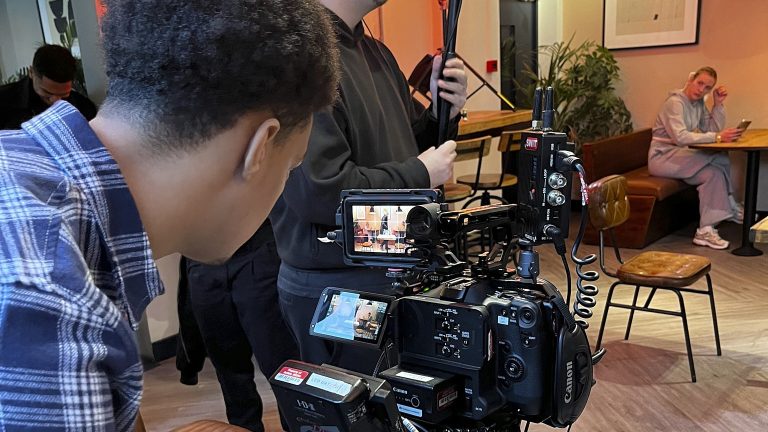
You train on the same cameras, sound gear and lights used on sets across the region.
Applying takes about ten minutes. You need to be 16 to 19, or up to 25 with an EHCP, and living near one of the four areas. We read every application and you’ll hear from us either way.
Join Our Crew
The introductory course runs over seven days, spread across a month. Here’s what to expect.
Explore the Crew Role That Fits You
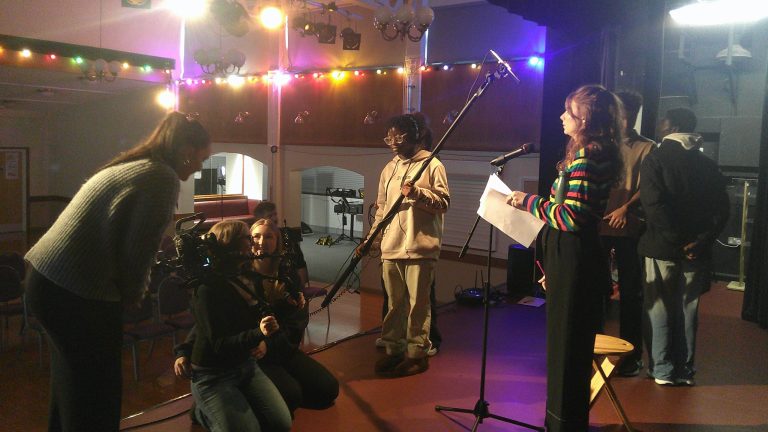
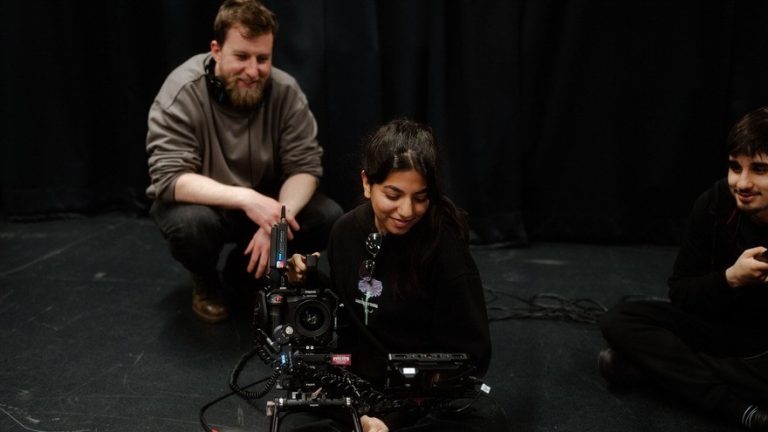
Work across the four departments that get a film made: camera, sound, production and art. Try each one, and find out what you’re good at and what you actually enjoy.
It made me realise that there’s so much more to filmmaking than directing and producing.
Oliver, alumni
Get On-Set Experience and Technical Skills
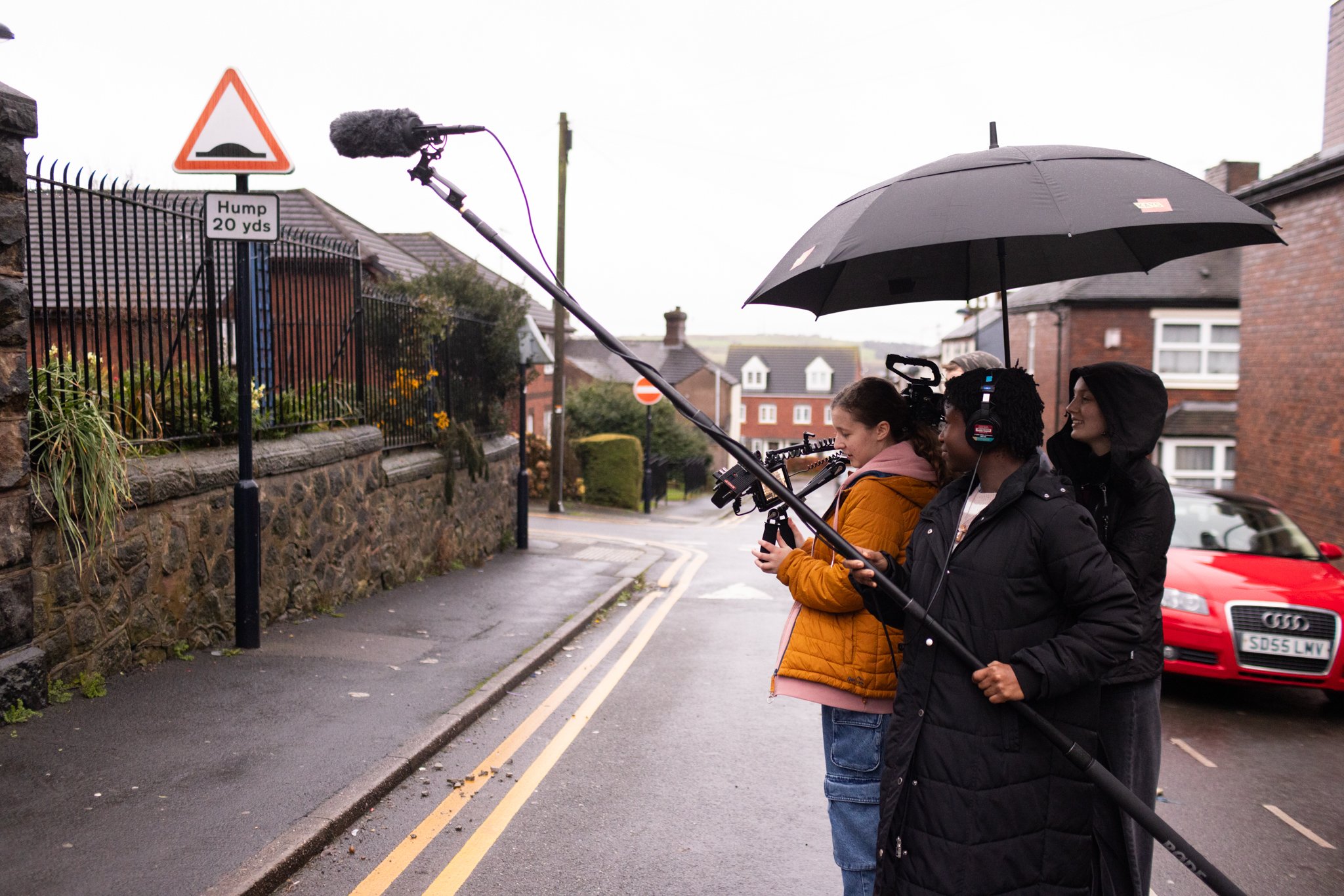
Learn the fundamentals where they’re actually used: on a working set, on industry-standard cinema cameras, alongside people who do this for a living.
Broken down masterfully, to make them easily digested without dumbing the information down.
Tia
Work as a Crew, and Be Part of Something
A film gets made by people who can rely on each other. Take a real role, carry it, and make something with a cohort from across the West Midlands, people who stay in touch long after.
A team of like-minded enthusiasts. A very supportive space to be creative in.
Charles
Learn How the Industry Actually Works
How a production is organised, who does what, where the work gets advertised, and how people get their first paid job. The parts nobody explains unless they’re already in it.
We got to see the industry from a number of angles, which was great.
Louie
Build the Confidence to Be on a Set
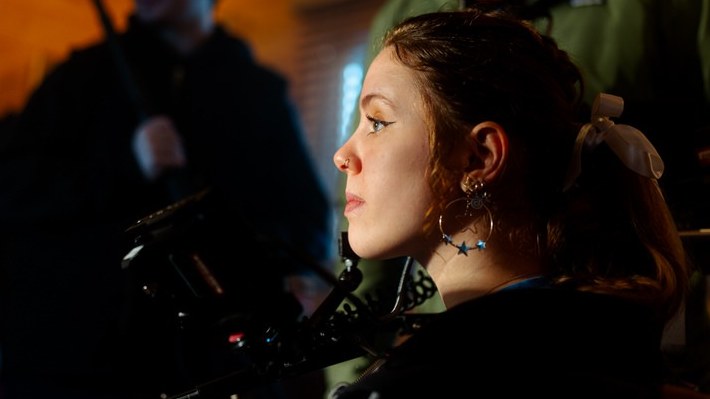
Knowing how to speak up, ask a question, take direction and hold a job on a working set. It’s the thing participants mention most, and the thing that transfers furthest.
It has improved my confidence a lot.
Lily
Screen Your Film and Build Your Network
Your film screens at Flatpack Film Festival. Your course also finishes with its own screening and networking evening. There is an audience in the room, and people from the local industry with real routes on.
Having more contacts in the industry has made it a more real career aspiration.
Annabel
Those days are Monday to Friday, in the daytime, usually 10am to 4pm, with one longer production day. Your screening is an evening, a week or two after. That’s how the industry works: weekdays, on set, to a call sheet. If your weekdays are open, it fits.
Followed by a year-round programme.
At school or college? Talk to us. Some of our partners can support a release day, and the year-round activity runs in the evenings and online.
What It’s Like to Be There
It was good to see my radio aid being worn and people allowing me to take a break when needed. I felt like I belonged.
Lucy
I felt like it was very accommodating for people who were neurodivergent. The way of answering questions encouraged interaction and made me a lot more likely to join in.
Ruby
We were treated as equal throughout the entire course regardless of age, gender and previous skills.
Megan
What You’ll Gain
A credit on a finished film
Your film screened at Flatpack Film Festival
Real film skills, and digital certificates to prove them
An understanding of crew roles and the routes into work
Travel costs covered throughout
Alumni membership for life
Where People Went Next
BFI Film Academy exists to move people into the industry. The panels, the workshops, the contacts and the alumni network are all there to turn a first credit into a second one.
I have had two gigs since filming as a boom op.
Libby, alumni
I got into the BFI Production Management Specialist course, and tracked continuity as Script Supervisor on a ten-day feature film.
Thea, alumni
I’m now a graduate at Metfilm Manchester film school, camera operating on big festivals like Creamfields and Kendal Calling.
Oliver, alumni
Still Deciding?
We are happy to talk it through. Ask us anything about the courses, what happens on them, or whether you are eligible, and we will come back to you.